
 NGI Profile
 Manufacturing Base
 Service
 Certification


 Aerospace Industry
 Automotive Electronics
 BMS/Battery Protection Board
 3C Electronics
 Clean Energy Power Generation
 Energy Storage
 Semiconductor/IC
 AI Server Power Supply
 Hydrogen Energy Industry
 Data Sheet
 Product Video
 User Manual
 Communication Protocol
 Software & Driver
 Application
 Applications
 New Arrival
 Trade Show
 EN
EN CN
CN AR
AR FR
FR IT
IT JA
JA KO
KO PT
PT RU
RU ES
ES TR
TR
AI Data Center Power Testing Challenges and NGI Solutions for Next-Generation AIDC Infrastructure
As large language models continue to evolve at an unprecedented pace, global investment in AI computing infrastructure has entered an intensive competition phase.
According to industry forecasts, China’s AIDC market is expected to reach RMB 177.8 billion by 2026 and approach RMB 400 billion by 2030.
In this race for computing power, the performance of AIDC infrastructure depends not only on GPUs, but also on the “hidden hero” inside the rack — the power delivery system.
Ensuring that every stage of power conversion, from the AC grid input to the GPU core, operates with high stability, efficiency, and safety has become a critical factor in determining AIDC competitiveness.
This article explores the power supply testing challenges faced by AIDC infrastructure in the era of accelerated AI computing growth and introduces NGI’s comprehensive testing solutions.
Three Major Challenges in AIDC Power Architecture Testing
In traditional data centers, 12V power distribution architectures were once the industry standard.
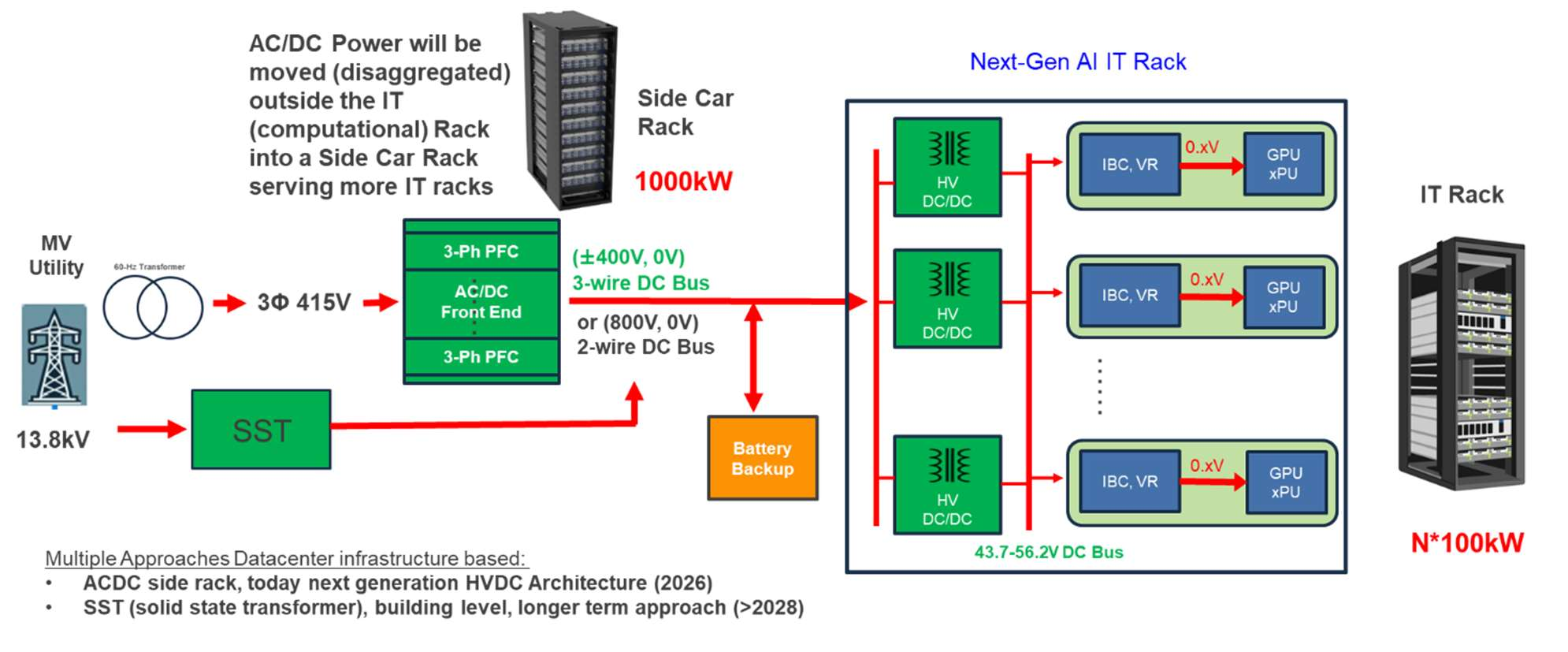
Today, AI server power architectures are rapidly evolving toward higher voltage levels:
l 48V / 54V architectures have become mainstream solutions.
l ±400V and 800V power architectures are increasingly being adopted by leading cloud service providers.
This transformation brings significant advantages, including higher power capability and improved efficiency. However, it also introduces more complex testing requirements.
High-speed dynamic response, high energy consumption, and full-scenario validation are pushing traditional test equipment beyond its existing limitations.
Challenge 1: High-Speed Dynamic Response
AIDC systems adopt complex multi-stage power architectures:
From high-voltage DC (HVDC) input, to centralized 48V / 54V output from rack power systems, and finally to multi-phase DC/DC conversion on server motherboards, supplying 0.6V–5V low-voltage high-current power to GPU/CPU cores.
During large-scale parallel computing workloads, GPUs frequently transition between idle and full-load states.
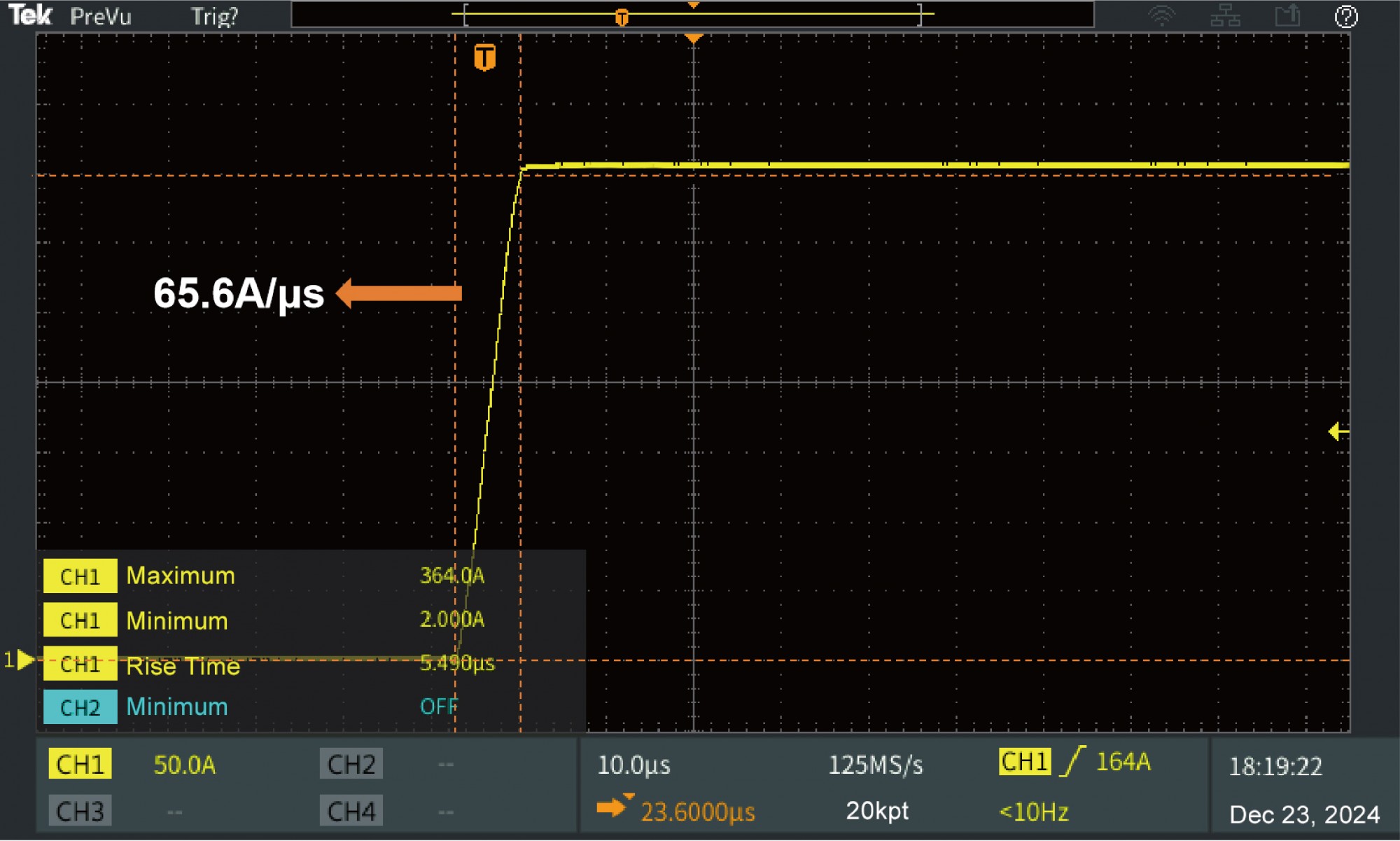
The current slew rate during these transitions can reach hundreds of amperes per microsecond (A/μs).
Therefore, test systems must be capable of simulating high-speed dynamic load variations ranging from tens to hundreds of A/μs to accurately validate AI server power stability and transient response.
Challenge 2: High Energy Consumption
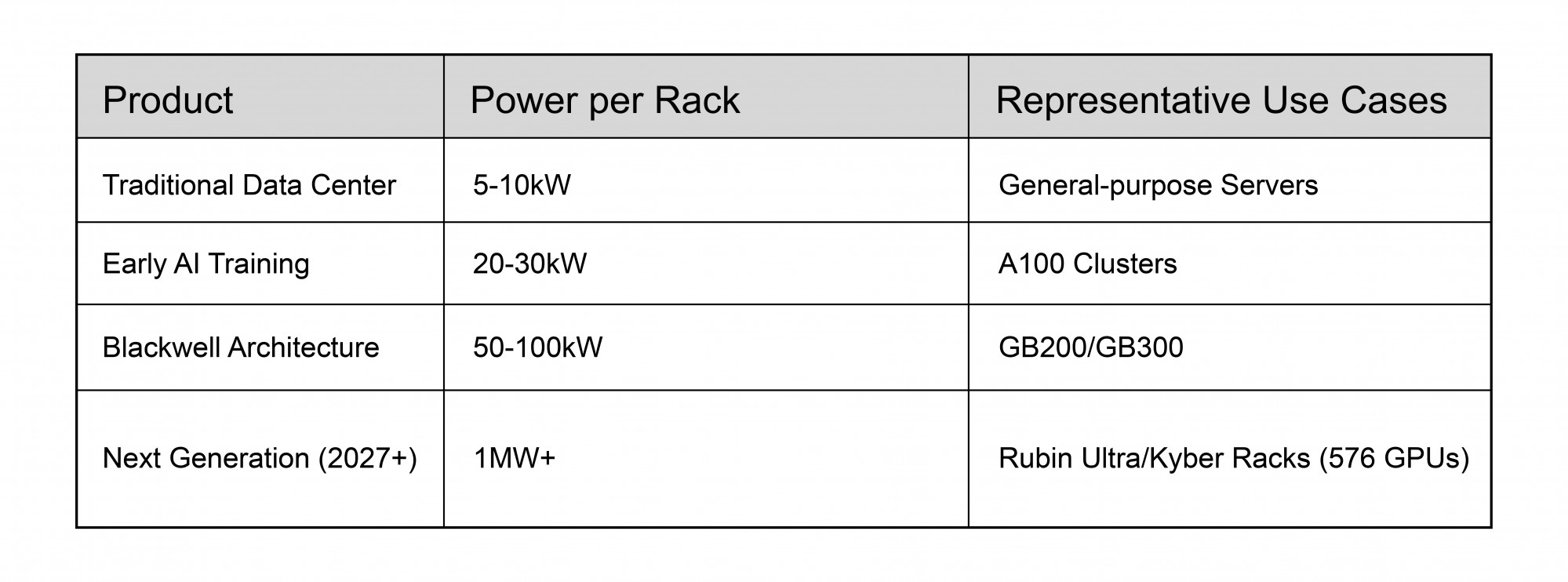
In the AIDC era, the power capacity of a single server power rack has increased dramatically:
From traditional 5–10kW levels to hundreds of kilowatts or even MW-level systems.
Traditional resistive loads and conventional electronic loads are limited by their operating principles, converting all consumed testing energy into heat.
This results in:
l High electricity costs during testing
l Additional cooling requirements
l Increased operational expenses for thermal management
For large-scale AIDC power validation, energy efficiency during testing has become a critical consideration.
Challenge 3: Full-Scenario Coverage for BESS/CBU and Computing-Energy Integration
Due to the characteristics of AIDC infrastructure — including high power density, strong load fluctuations, and extremely high reliability requirements — the power system is gradually evolving from a supporting component into a key constraint for computing infrastructure deployment.
Since 2025, multiple energy storage solutions for AIDC have accelerated into practical deployment.
Technologies including:
l Grid-forming energy storage
l High-voltage DC architectures
l Lithium/sodium energy storage integration
l Intelligent energy scheduling
are advancing simultaneously.
The industry is shifting from traditional backup power configuration toward integrated coordination between computing power and energy systems.
Energy storage systems, BBU (Battery Backup Unit), CBU (Capacitor Backup Unit), and related power infrastructure are becoming standard components in AIDC deployment, making them important targets for validation and testing.
NGI Full-Scenario AIDC Power Testing Solution
With years of expertise in data center power testing, NGI has developed a comprehensive AIDC power testing solution to address industry challenges and support customers in adapting to next-generation power architecture upgrades.
The solution delivers the following key customer benefits:
High-Speed Dynamic Response
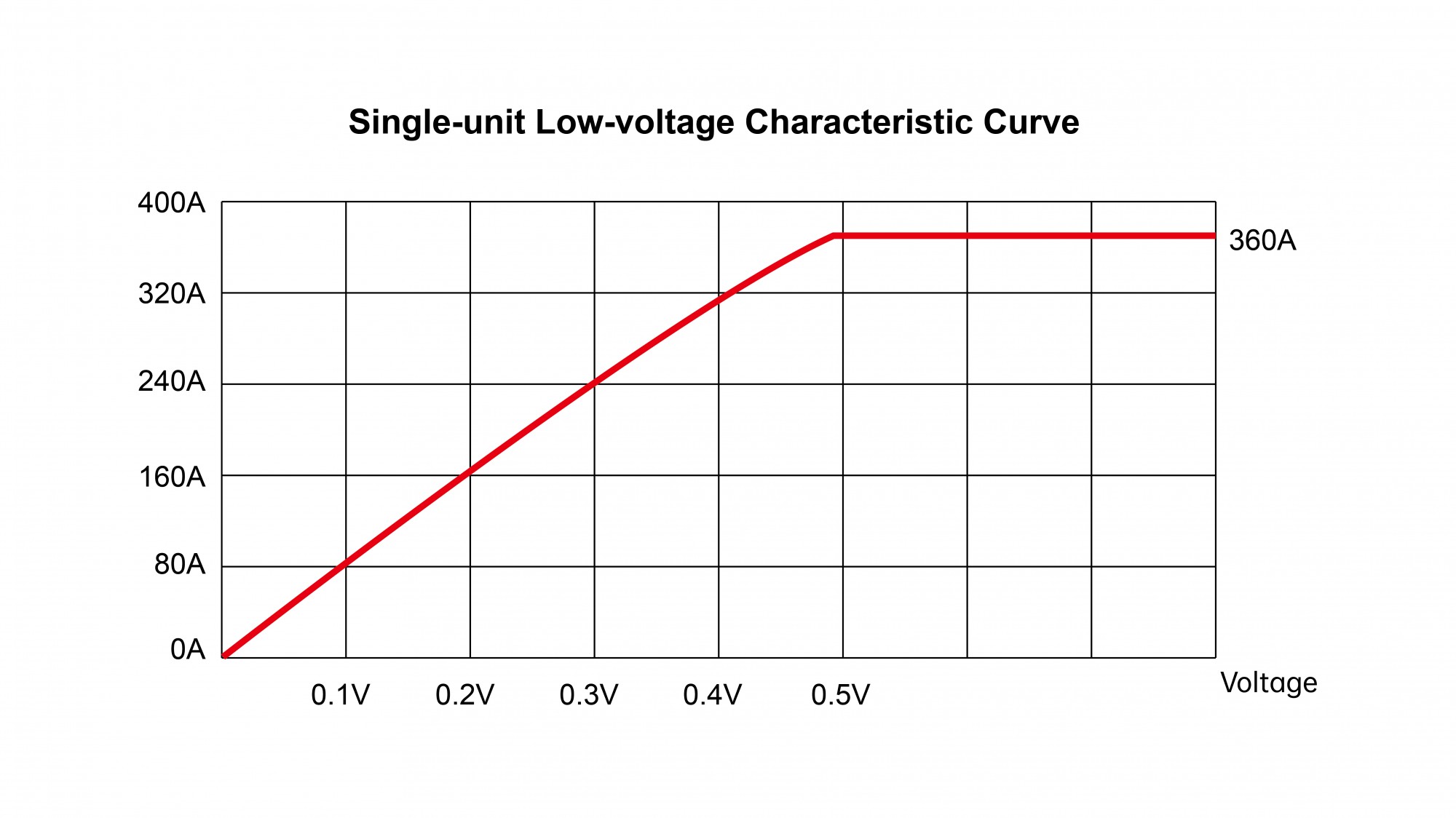
The NGI N69200H and N67000 series loads support a single unit slew rate of up to 60 A/μs, and support parallel connection of multiple units for power expansion up to the MW level, achieving slew rates as high as hundreds of A/μs. This makes them well suited for high speed dynamic load testing requirements of AI server power supplies and Vcore power supplies.
High-Efficiency Energy Regeneration for Reduced Operating Costs
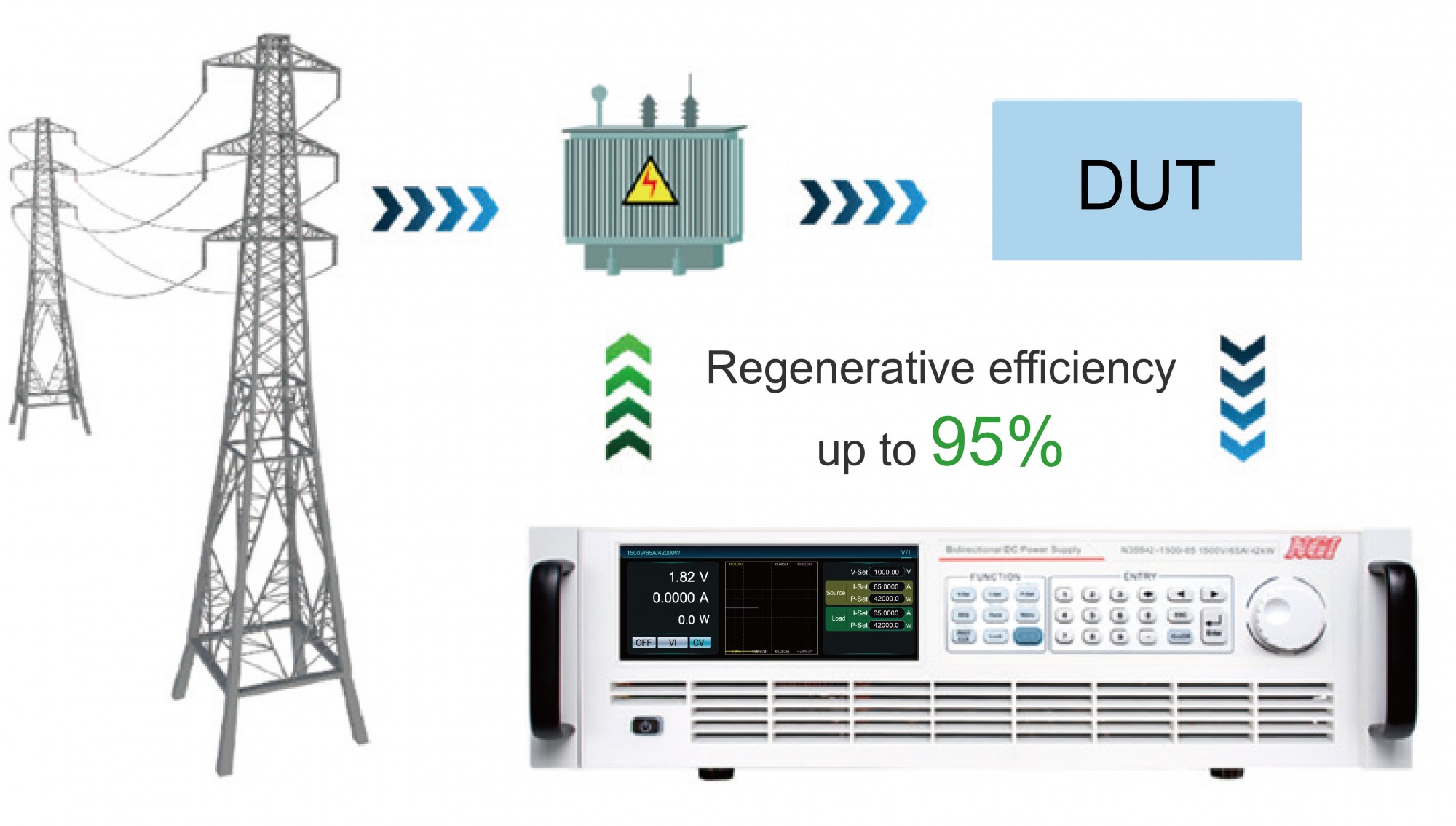
NGI N35500 and N35100 Series High-Performance Bidirectional DC Power Supplies support one-click switching into regenerative load mode.
The system can feed testing energy back into the grid with regeneration efficiency of up to 95%.
In high-power testing scenarios such as:
l HVDC systems
l Rack Power systems
the solution significantly reduces:
l Electricity consumption costs
l Cooling system operating expenses
while improving overall testing efficiency.
Comprehensive Full-Scenario Coverage
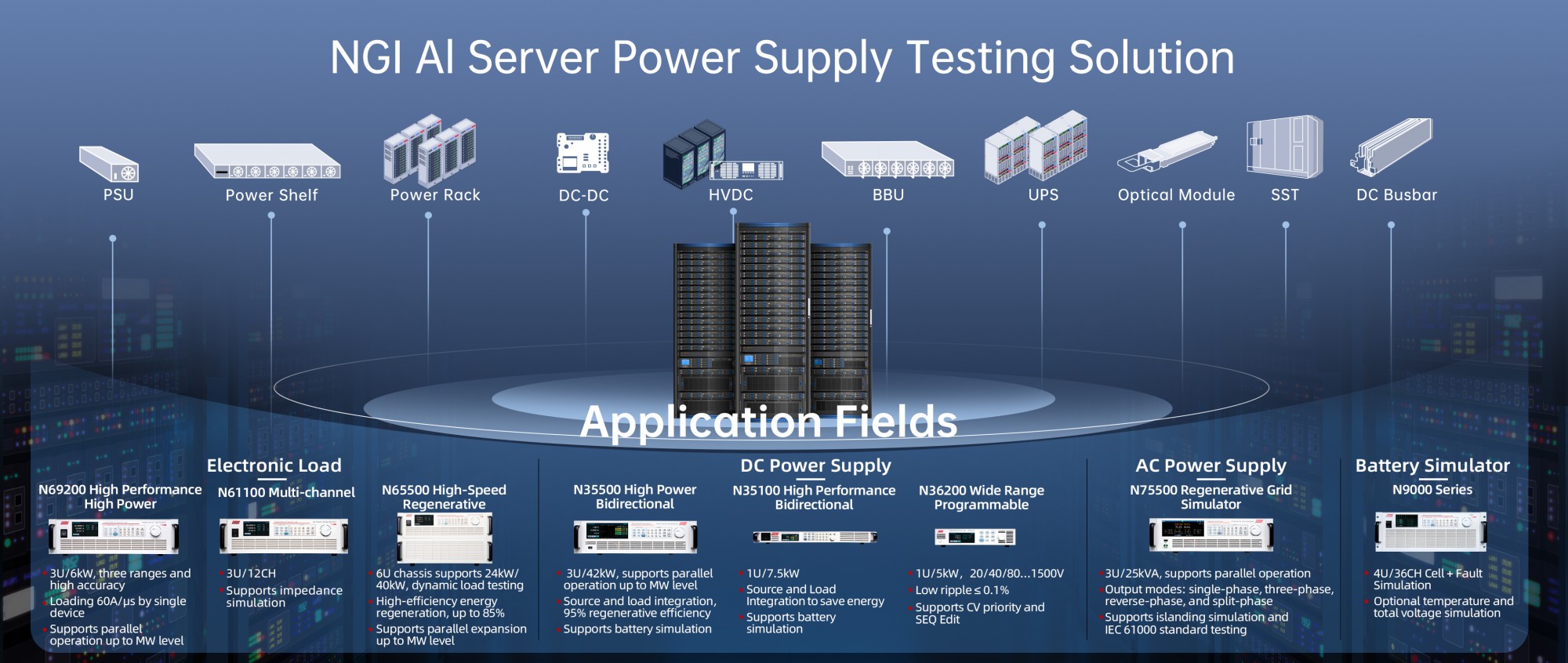
NGI’s AIDC testing solution covers ten major application scenarios, including:
l SST (Solid-State Transformer)
l HVDC
l UPS
l PSU
l Power Shelf
l Rack Power
l DC-DC
l Optical Module
l Busbar
l BBU
The solution can also support emerging AIDC energy storage testing requirements, including:
l BESS (Battery Energy Storage System)
l CBU (Capacitor Backup Unit)
Powering the Future of AI Infrastructure Through Advanced Testing
As AI computing infrastructure continues moving toward higher power density, higher voltage architectures, and more complex energy integration, testing capability has become a critical foundation for successful deployment.
Through high-speed dynamic simulation, regenerative energy recovery, and full-scenario validation capabilities, NGI’s AIDC power testing solutions help customers accelerate the development and deployment of next-generation AI power architectures.